


What is the manufacturing process of a blowing mold?
As a seasoned blowing mold supplier, I'm excited to take you through the intricate manufacturing process of a blowing mold. Blowing molds are essential in the production of various hollow plastic products, from simple bottles to complex industrial containers. Understanding the manufacturing process can help you appreciate the craftsmanship and precision that goes into creating these molds and make more informed decisions when it comes to purchasing them.
Design Phase
The manufacturing journey of a blowing mold begins with the design phase. This is a crucial step where the specifications of the final product are translated into a detailed mold design. Our team of experienced designers works closely with clients to understand their requirements, including the shape, size, and functionality of the plastic product. We use advanced 3D modeling software to create a virtual representation of the mold, allowing us to visualize the design and make any necessary adjustments before moving on to the next stage.
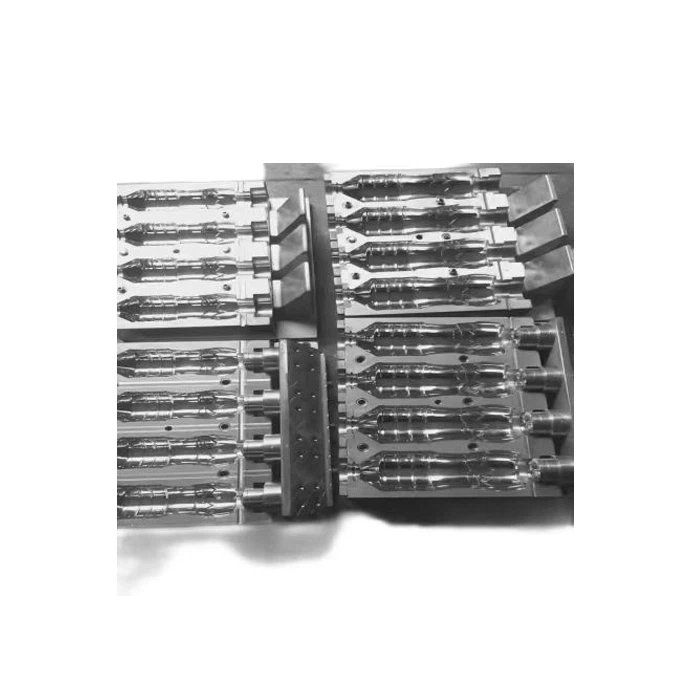
During the design phase, we also consider factors such as the type of plastic to be used, the production volume, and the expected lifespan of the mold. These factors influence the choice of materials and the overall design of the mold. For example, if the production volume is high, we may opt for a multi - cavity mold, such as a 6 Cavity Blow Mold, 4 Cavity Blow Mold, or 1 Cavity Blow Mold depending on the specific needs. A multi - cavity mold can significantly increase production efficiency by allowing multiple products to be produced simultaneously.
Material Selection
Once the design is finalized, the next step is to select the appropriate materials for the mold. The choice of material is critical as it directly affects the performance, durability, and cost of the mold. Common materials used for blowing molds include aluminum, steel, and alloy steel.
Aluminum is a popular choice for low - volume production or prototypes due to its lightweight, good thermal conductivity, and relatively low cost. It is easy to machine, which allows for quick turnaround times during the manufacturing process. However, aluminum molds may not be as durable as steel molds and are more prone to wear and tear.
Steel and alloy steel are preferred for high - volume production and applications that require high precision and durability. These materials can withstand the high pressures and temperatures involved in the blow - molding process and offer excellent resistance to corrosion and abrasion. The selection between different types of steel depends on factors such as the complexity of the mold design, the expected production volume, and the budget.
Machining
After the material is selected, the machining process begins. Machining is the process of shaping the raw material into the desired mold form. This involves several steps, including milling, turning, drilling, and grinding.
Milling is used to remove large amounts of material and create the basic shape of the mold. Computer Numerical Control (CNC) milling machines are commonly used in modern mold manufacturing as they offer high precision and repeatability. The CNC machines are programmed with the 3D design data, allowing them to accurately cut and shape the material according to the specifications.
Turning is used to create cylindrical or round features on the mold, such as the neck of a bottle mold. Drilling is used to create holes for cooling channels, ejector pins, and other components. Grinding is the final step in the machining process, which is used to achieve a smooth surface finish on the mold. A smooth surface finish is essential for ensuring the quality of the plastic products and reducing the risk of defects.

Heat Treatment
Heat treatment is an important step in the manufacturing process of a blowing mold. It is used to improve the mechanical properties of the mold, such as hardness, strength, and toughness. The heat treatment process involves heating the mold to a specific temperature and then cooling it at a controlled rate.
There are different types of heat treatment processes, including annealing, quenching, and tempering. Annealing is used to relieve internal stresses in the material and improve its machinability. Quenching is used to increase the hardness of the material by rapidly cooling it from a high temperature. Tempering is then performed to reduce the brittleness caused by quenching and improve the toughness of the material.
The specific heat treatment process used depends on the type of material and the requirements of the mold. Proper heat treatment can significantly extend the lifespan of the mold and improve its performance during the blow - molding process.
Surface Treatment
Surface treatment is the next step after heat treatment. It is used to enhance the surface properties of the mold, such as corrosion resistance, wear resistance, and release properties. Common surface treatment methods for blowing molds include plating, nitriding, and coating.
Plating involves depositing a thin layer of metal, such as chrome or nickel, on the surface of the mold. This can improve the corrosion resistance and wear resistance of the mold and provide a smooth surface finish. Nitriding is a process that introduces nitrogen into the surface of the mold, which can increase its hardness and wear resistance. Coating involves applying a special coating, such as a non - stick coating, to the surface of the mold. This can improve the release properties of the mold, making it easier to remove the plastic products from the mold.
Assembly
After the machining, heat treatment, and surface treatment are completed, the individual components of the mold are assembled. The assembly process involves carefully fitting the different parts together, such as the core, cavity, cooling channels, ejector pins, and other components.
During the assembly process, it is important to ensure that all the components are properly aligned and secured. Any misalignment or loose fitting can lead to defects in the plastic products or damage to the mold. Quality control checks are performed at each stage of the assembly process to ensure that the mold meets the required specifications.
Testing and Quality Control
Once the mold is assembled, it undergoes a series of testing and quality control checks. The mold is first tested on a blow - molding machine to ensure that it functions properly and produces high - quality plastic products. The testing process involves checking the dimensions, shape, and surface finish of the plastic products, as well as the performance of the mold, such as the cooling efficiency and the ease of product ejection.
Quality control checks are also performed on the mold itself to ensure that it meets the design specifications. This includes checking the hardness, surface finish, and dimensional accuracy of the mold. Any defects or deviations from the specifications are identified and corrected before the mold is approved for production.
Conclusion
The manufacturing process of a blowing mold is a complex and precise process that involves multiple steps, from design to testing. Each step requires careful attention to detail and the use of advanced technologies and techniques. As a blowing mold supplier, we are committed to providing high - quality molds that meet the specific needs of our clients.
If you are in the market for a blowing mold, whether it's a single - cavity or multi - cavity mold, we invite you to contact us for a detailed discussion. Our team of experts can help you choose the right mold design, material, and manufacturing process based on your requirements. We look forward to the opportunity to work with you and contribute to the success of your plastic product manufacturing business.
References
- ASM Handbook Committee. (2001). ASM Handbook: Heat Treating. ASM International.
- Groover, M. P. (2010). Fundamentals of Modern Manufacturing: Materials, Processes, and Systems. Wiley.
- Kalpakjian, S., & Schmid, S. R. (2010). Manufacturing Engineering and Technology. Pearson.


