


Hey there! As a supplier of 32 Cavity Preform Molds, I get asked a lot about how to pick the right injection molding machine for these molds. It's a crucial decision, and getting it wrong can lead to all sorts of headaches, like poor-quality preforms, long production times, and even extra costs. So, I thought I'd share some tips on how to make this important choice.
Understanding Your Mold First
Before you start looking at injection molding machines, you need to have a solid understanding of your 32 Cavity Preform Mold. The mold's size, weight, and the material it's made from can all have a big impact on the type of machine you need.
The size of the mold is super important. You've got to make sure the machine's platen size is big enough to hold the mold properly. If the platen is too small, the mold might not fit, or it could be unstable during the injection process. You can check out our 32 Cavity Preform Mold page to get an idea of the typical dimensions.
The weight of the mold also matters. A heavy mold needs a machine with a strong clamping force to keep it closed during injection. If the clamping force is too weak, the mold might open up, causing flash on the preforms.
Clamping Force
One of the most critical factors when selecting an injection molding machine is the clamping force. This is the force that holds the mold closed while the plastic is being injected. For a 32 Cavity Preform Mold, you need to calculate the right clamping force based on the projected area of the preforms in the mold.
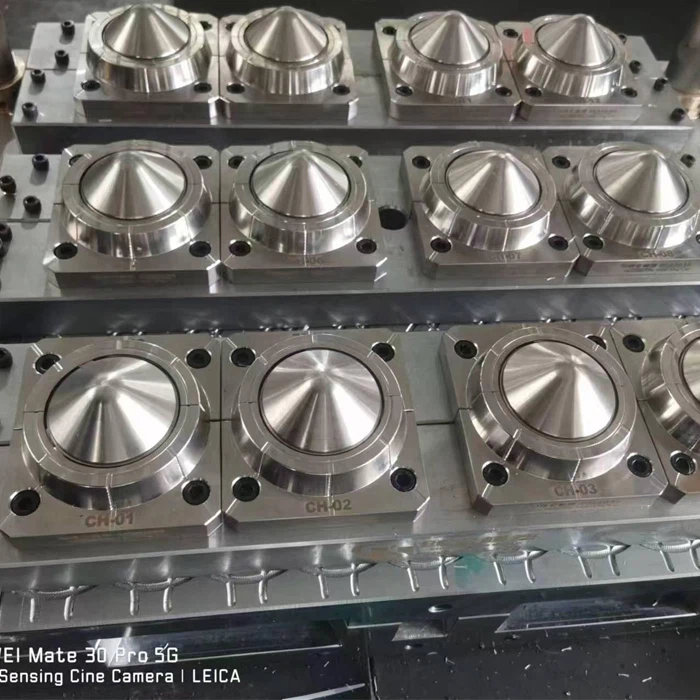

The projected area is basically the area of the preforms as seen from the top of the mold. You can usually get this information from the mold design. Once you have the projected area, you can use a simple formula to calculate the required clamping force. A general rule of thumb is that you need about 2 - 4 tons of clamping force per square inch of projected area. But this can vary depending on the type of plastic you're using and the injection pressure.
Injection Volume
Another key consideration is the injection volume. This is the amount of plastic that the machine can inject into the mold in one shot. For a 32 Cavity Preform Mold, you need to make sure the machine can inject enough plastic to fill all the cavities evenly.
You can calculate the total volume of plastic needed by multiplying the volume of one preform by the number of cavities (in this case, 32). Then, you need to choose a machine with an injection volume that's slightly larger than this calculated value. This ensures that there's enough plastic to fill the mold completely and account for any shrinkage that might occur during cooling.
Screw Diameter and L/D Ratio
The screw diameter and the length-to-diameter (L/D) ratio of the injection unit are also important. The screw diameter affects the plasticizing capacity of the machine. A larger screw diameter can plasticize more plastic in a shorter time, which is great for high-volume production.
The L/D ratio, on the other hand, affects the quality of the plastic melt. A higher L/D ratio usually means better mixing and melting of the plastic, resulting in higher-quality preforms. For a 32 Cavity Preform Mold, you might want to look for a machine with a screw diameter and L/D ratio that can handle the type of plastic you're using efficiently.
Injection Speed and Pressure
The injection speed and pressure can have a big impact on the quality of the preforms. A fast injection speed can help fill the mold cavities quickly, reducing the chances of air traps and uneven filling. However, if the injection speed is too high, it can cause flashing or other defects.
The injection pressure is also crucial. It needs to be high enough to fill the mold completely, but not so high that it damages the mold or causes excessive wear on the machine. You'll need to find a balance between injection speed and pressure based on the type of plastic and the design of the preform.
Plasticizing Capacity
The plasticizing capacity of the machine is how fast it can melt and prepare the plastic for injection. For a 32 Cavity Preform Mold, you need a machine with a high plasticizing capacity to keep up with the production demands.
The plasticizing capacity is usually measured in pounds per hour. You can calculate the required plasticizing capacity based on the cycle time of your production process and the amount of plastic needed per cycle. Make sure to choose a machine with a plasticizing capacity that can meet or exceed your production requirements.
Cooling System
A good cooling system is essential for producing high-quality preforms. The cooling system helps to solidify the plastic in the mold quickly and evenly, reducing the cycle time and improving the dimensional stability of the preforms.
When selecting an injection molding machine, look for one with an efficient cooling system. This might include features like water channels in the mold, a cooling tower, or a chiller. The cooling system should be able to maintain a consistent temperature throughout the molding process.
Automation and Control
Automation and control features can make your production process more efficient and reliable. Look for a machine with advanced control systems that allow you to adjust parameters like injection speed, pressure, and temperature easily.
Some machines also offer automation features like robotic part removal, which can reduce labor costs and improve the consistency of the production process. Consider your production volume and requirements when deciding which automation and control features are right for you.
Cost and Budget
Of course, cost is always a factor when selecting an injection molding machine. You need to find a machine that fits your budget while still meeting your production requirements.
Keep in mind that the initial cost of the machine is not the only expense. You also need to consider the cost of maintenance, energy consumption, and any additional features or accessories you might need. Look for a machine that offers a good balance between cost and performance.
Conclusion
Selecting the appropriate injection molding machine for a 32 Cavity Preform Mold is a complex decision that requires careful consideration of many factors. By understanding your mold, considering factors like clamping force, injection volume, and plasticizing capacity, and looking at features like automation and control, you can make an informed choice that will help you produce high-quality preforms efficiently.
If you're in the market for a 32 Cavity Preform Mold or need more information on selecting the right injection molding machine, feel free to reach out to us. We're here to help you with all your preform mold needs, whether it's a Jar Preform Mold or a 16 Cavity Preform Mold. Let's start a conversation and see how we can work together to meet your production goals.
References
- "Injection Molding Handbook" by O. Olszewski
- "Plastics Processing Technology" by J. Beaumont


