


Hey there! I'm a supplier of 1 Cavity Blow Molds, and today I wanna chat about how injection speed can impact these molds. It's a topic that might not seem super exciting at first, but trust me, it's crucial for getting the best results when using 1 Cavity Blow Molds.
Let's start by understanding what injection speed actually means. In the context of blow molding, injection speed refers to how fast the molten plastic is injected into the mold cavity. This speed can vary depending on a bunch of factors, like the type of plastic being used, the design of the mold, and the final product requirements.
One of the most significant effects of injection speed is on the quality of the finished product. When the injection speed is too slow, the plastic might start to cool down before it fully fills the mold cavity. This can lead to issues like incomplete filling, where parts of the product are thin or missing altogether. It can also cause weld lines, which are visible lines on the surface of the product where different streams of plastic meet. Weld lines not only look bad but can also weaken the structure of the product, making it more prone to breakage.
On the flip side, if the injection speed is too fast, it can create a lot of turbulence in the molten plastic. This turbulence can trap air bubbles inside the plastic, resulting in voids or porosity in the finished product. Voids are essentially empty spaces within the plastic, and they can significantly reduce the strength and durability of the product. Additionally, a high injection speed can cause the plastic to shear as it flows through the mold. Shearing can degrade the plastic, changing its properties and potentially affecting the performance of the final product.
Another aspect to consider is the cycle time. Cycle time is the total time it takes to complete one full molding cycle, from the moment the plastic is injected into the mold to when the finished product is ejected. Injection speed plays a big role in determining the cycle time. A faster injection speed generally means a shorter cycle time, which can increase the overall productivity of the manufacturing process. However, as we've already discussed, increasing the injection speed too much can lead to quality issues. So, it's all about finding that sweet spot where you can achieve a reasonable cycle time without sacrificing the quality of the product.
The design of the 1 Cavity Blow Mold also interacts with the injection speed. For example, if the mold has a complex shape or thin - walled sections, a slower injection speed might be necessary to ensure that the plastic can flow smoothly into all the nooks and crannies of the mold. On the other hand, a simple mold design with thick walls might allow for a faster injection speed.
Now, let's talk about the material. Different types of plastics have different flow properties, and these properties affect how they respond to injection speed. For instance, high - density polyethylene (HDPE) has a relatively high melt viscosity, which means it doesn't flow as easily as some other plastics. When molding with HDPE, a higher injection speed might be required to get the plastic to fill the mold cavity properly. In contrast, polypropylene (PP) has a lower melt viscosity and can often be molded at a lower injection speed.
As a 1 Cavity Blow Mold supplier, I've seen firsthand how important it is to optimize the injection speed for each specific application. We work closely with our customers to understand their product requirements, the type of plastic they're using, and the overall manufacturing process. By doing so, we can recommend the most suitable injection speed and help them achieve the best results.
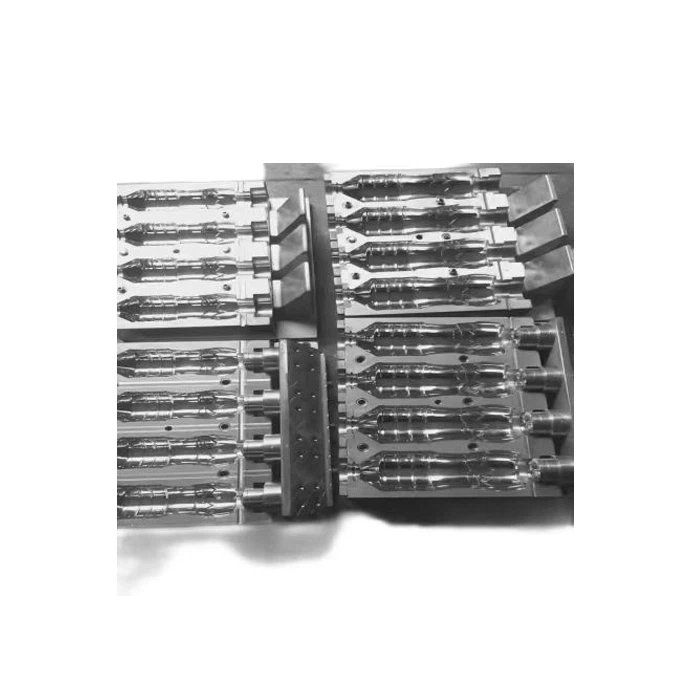
If you're in the market for other types of blow molds, we also offer 4 Cavity Blow Mold and 8 Cavity Blow Mold. These multi - cavity molds can significantly increase your production output. And if you're specifically interested in PET bottles, our PET Bottle Blowing Mold is designed to meet the high - quality standards of the beverage and packaging industries.
In conclusion, injection speed is a critical factor when it comes to using 1 Cavity Blow Molds. It can affect the quality of the finished product, the cycle time, and the overall productivity of the manufacturing process. Finding the right injection speed requires a careful balance between speed and quality, taking into account factors like mold design, plastic material, and product requirements.
If you're looking to purchase 1 Cavity Blow Molds or have any questions about injection speed and its impact on your molding process, don't hesitate to reach out. We're here to help you make the most of your blow molding operations and ensure that you get high - quality products every time.

References
- "Plastics Processing: Injection Molding" by George E. Totten
- "Blow Molding Handbook" by Nallan L. Rao


