


What is the production capacity of a 4 Cavity Blow Mold?
As a seasoned supplier of 4 Cavity Blow Molds, I've had the privilege of witnessing firsthand the remarkable capabilities of these molds in the manufacturing industry. In this blog, I'll delve into the production capacity of a 4 Cavity Blow Mold, exploring its factors, advantages, and real - world applications.
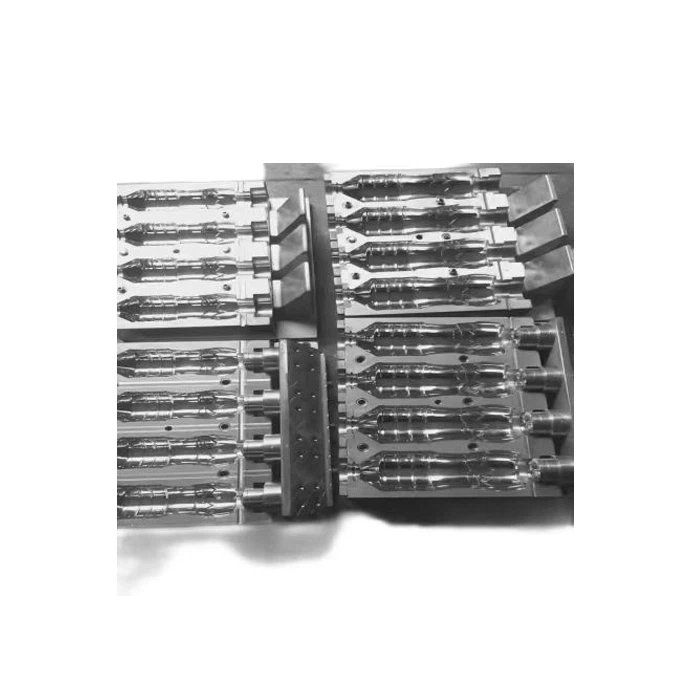

Understanding 4 Cavity Blow Molds
A 4 Cavity Blow Mold is a specialized tool used in the blow - molding process. Blow molding is a manufacturing technique primarily used for producing hollow plastic products such as bottles, containers, and automotive parts. The term "4 Cavity" refers to the number of individual molds or cavities within the larger mold structure. Each cavity can produce one plastic part during a single molding cycle.
When we talk about the production capacity of a 4 Cavity Blow Mold, it essentially means the number of plastic parts that can be manufactured within a specific period, usually an hour, a day, or a month. This capacity is influenced by several key factors.
Factors Affecting Production Capacity
- Cycle Time: Cycle time is the total time required to complete one full molding cycle, from the moment the plastic resin is injected into the mold to the point when the finished part is ejected. It includes stages such as clamping, blowing, cooling, and opening the mold. Shorter cycle times directly translate to higher production capacity. For a 4 Cavity Blow Mold, the cycle time is determined by factors like the size and complexity of the part, the type of plastic resin used, and the efficiency of the blow - molding machine. For example, if the cycle time of a 4 Cavity Blow Mold is 20 seconds, it can produce 720 parts per hour (3600 seconds / 20 seconds * 4 cavities).
- Part Size and Complexity: Larger and more complex parts generally require longer cycle times. A simple, small - sized bottle may have a relatively short cycle time, while a large automotive air duct with intricate shapes and thin walls will take much longer to mold. In addition, parts with complex geometries may need more cooling time to ensure proper solidification, which can slow down the production process.
- Material Properties: Different plastic resins have different melting points, flow characteristics, and cooling rates. For instance, high - density polyethylene (HDPE) has a relatively fast cooling rate compared to polycarbonate (PC). Faster - cooling materials allow for shorter cycle times, increasing the production capacity of the 4 Cavity Blow Mold.
- Machine Efficiency: The performance of the blow - molding machine also plays a crucial role. A high - speed, well - maintained machine can operate more smoothly and quickly, reducing the time between cycles. Features such as precise temperature control, accurate pressure regulation, and fast clamping and ejection systems contribute to overall machine efficiency.
Advantages of Using a 4 Cavity Blow Mold
- Increased Output: The most obvious advantage of a 4 Cavity Blow Mold is its ability to produce four parts simultaneously in each cycle. Compared to a single - cavity mold, it can significantly boost production volume. This is especially beneficial for large - scale manufacturing operations where high - volume production is required to meet market demand.
- Cost - Effectiveness: Although the initial investment in a 4 Cavity Blow Mold is higher than that of a single - cavity mold, the cost per part is generally lower in the long run. With increased production volume, the fixed costs associated with mold manufacturing, machine setup, and labor can be spread over a larger number of parts, resulting in cost savings.
- Consistency: Since all four cavities in the mold are designed and machined to the same specifications, the parts produced are highly consistent in terms of size, shape, and quality. This consistency is crucial for industries such as the food and beverage packaging, where product uniformity is essential for brand image and regulatory compliance.
Real - World Applications
- Packaging Industry: The packaging industry is one of the largest consumers of 4 Cavity Blow Molds. They are widely used to produce plastic bottles for various products, including water, soft drinks, and personal care items. The high production capacity of 4 Cavity Blow Molds allows manufacturers to meet the large - scale demand for packaging containers in a timely manner.
- Automotive Industry: In the automotive sector, 4 Cavity Blow Molds are used to manufacture components such as air ducts, fuel tanks, and interior trim parts. The ability to produce multiple parts at once helps automotive manufacturers streamline their production processes and reduce costs.
- Consumer Goods Industry: For consumer goods like household cleaning products, toys, and storage containers, 4 Cavity Blow Molds offer an efficient way to produce large quantities of high - quality plastic parts.
Comparing with Other Multi - Cavity Blow Molds
In addition to 4 Cavity Blow Molds, there are also 6 Cavity Blow Molds and 8 Cavity Blow Molds. While these higher - cavity molds can produce even more parts per cycle, they also come with some challenges.
6 Cavity and 8 Cavity Blow Molds typically require larger and more powerful blow - molding machines, which can increase the initial investment and operating costs. Moreover, as the number of cavities increases, it becomes more difficult to ensure uniform filling and cooling across all cavities, which may lead to quality issues. Therefore, for many medium - scale production operations, a 4 Cavity Blow Mold strikes a good balance between production capacity and cost - effectiveness.
Conclusion
The production capacity of a 4 Cavity Blow Mold is a function of multiple factors, including cycle time, part size, material properties, and machine efficiency. It offers significant advantages in terms of increased output, cost - effectiveness, and part consistency, making it a popular choice in various industries.
If you are in the market for a reliable 4 Cavity Blow Mold to enhance your production efficiency, we are here to assist you. Our team of experts can provide you with detailed information about our products, help you select the most suitable mold for your specific needs, and offer comprehensive after - sales support. Whether you are a small - scale manufacturer or a large - scale industrial enterprise, we are committed to delivering high - quality solutions. Contact us today to start a productive procurement discussion.
References
- Modern Plastics Encyclopedia. McGraw - Hill.
- Blow Molding Handbook. Carl Hanser Verlag.


